Berberine vs Green Tea: Which Supports Metabolism Better?

Disclosure: This site may contain affiliate links. This content is for informational purposes only and does not constitute medical advice.
KEY TAKEAWAYS
- Berberine works through blood sugar and liver fat; green tea works through mild thermogenesis and antioxidants.
- Berberine has stronger data for liver fat and insulin resistance; green tea is gentler and better-tolerated.
- Neither is dramatic — both are modest, gradual supports that work best with diet and exercise.
- The better choice depends on your goal: metabolic/blood-sugar support (berberine) vs gentle thermogenic (green tea).
Two of the most popular natural metabolism ingredients are berberine and green tea — and they’re often pitted against each other as if one must win. But they work through completely different mechanisms, which means the real question isn’t “which is better” but “which is better for what.” Here’s the honest comparison.
Two Different Mechanisms
The first thing to understand is that these aren’t competing versions of the same thing — they do different jobs.
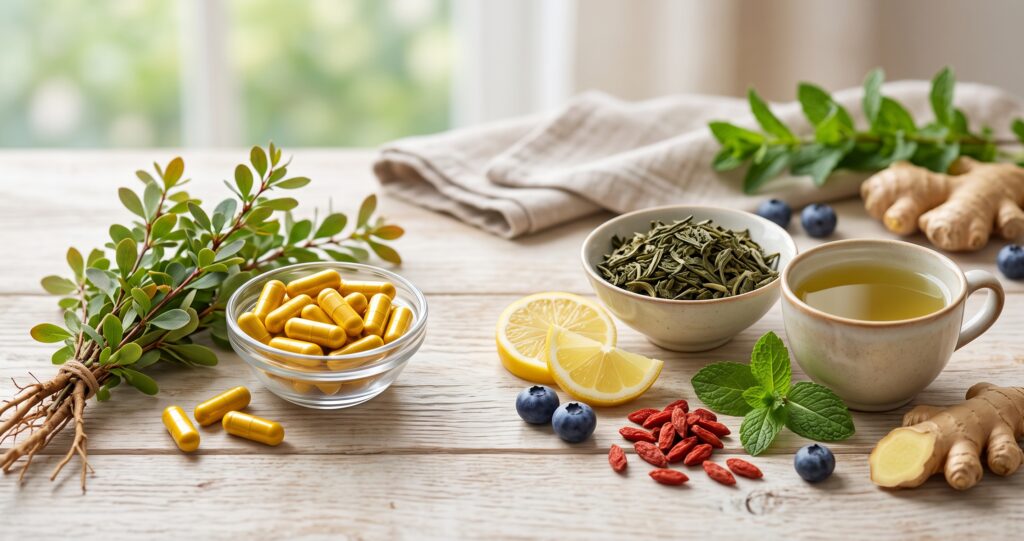
Berberine works primarily through metabolic and blood-sugar pathways. It activates an enzyme called AMPK that influences how the body handles glucose and fat, and it has notable effects on liver fat and insulin resistance.
Green tea works primarily through mild thermogenesis (slightly raising energy expenditure via catechins and caffeine) and antioxidant activity.
So comparing them is a bit like comparing a blood-sugar tool to a gentle thermogenic. The “winner” depends entirely on what you’re trying to support.
Berberine’s Case: Stronger Metabolic Data
Berberine has genuinely impressive research for metabolic health specifically.
As we’ve covered, a PLOS One trial found berberine plus lifestyle reduced liver fat by 52.7% (versus 36.4% for lifestyle alone), with improvements in insulin resistance and body weight. Its effects on blood sugar are well-documented enough that it’s sometimes (over-enthusiastically) called “nature’s metformin.”
Berberine’s edge: stronger evidence for liver fat, blood sugar, and insulin resistance — the metabolic core of stubborn weight gain after 40.
Berberine’s downside: digestive side effects in 20–30% of users, and real drug interactions (diabetes medications, blood thinners, and more) that require caution.
How Poor Sleep Quietly Wrecks Your Metabolic Rate
Green Tea’s Case: Gentler and Better-Tolerated
Green tea’s metabolic evidence is more modest, but it has real advantages of its own.
A meta-analysis in the International Journal of Obesity found green tea catechins combined with caffeine produced modestly greater weight loss than caffeine alone. The effect is small — but green tea is generally well-tolerated, widely available, and carries fewer interaction concerns than berberine.
Green tea’s edge: gentle, well-tolerated, antioxidant benefits, fewer drug interactions.
Green tea’s downside: the metabolic effect is smaller, it contains caffeine (a consideration for the caffeine-sensitive), and concentrated high-dose extracts carry a liver-injury signal to respect.
Head-to-Head Comparison
| Berberine | Green Tea | |
| Main mechanism | Blood sugar, liver fat, AMPK | Mild thermogenesis, antioxidants |
| Metabolic evidence | Stronger (liver fat, insulin resistance) | Modest (small thermogenic effect) |
| Tolerability | GI upset in 20–30% | Generally well-tolerated |
| Drug interactions | Significant (diabetes, blood thinners) | Fewer |
| Caffeine | None | Contains caffeine |
| Best for | Metabolic/blood-sugar support | Gentle thermogenic support |
So Which Is Better?
The honest answer: it depends on your goal, and they may actually work best together.
- Choose berberine if your concern is blood sugar, insulin resistance, or liver fat — the metabolic issues central to weight gain after 40 — and you’re not on interacting medications.
- Choose green tea if you want a gentle, well-tolerated option with antioxidant benefits and fewer interaction concerns, and don’t mind the caffeine.
- Consider both — they work through different, complementary mechanisms, which is exactly why some formulas combine them.
This is the logic behind combining them in a single formula. HepatoBurn , for instance, pairs berberine’s metabolic strength with other liver-supporting ingredients — targeting the metabolic and liver angles together rather than betting on one mechanism.
–> See the latest HepatoBurn pricing and availability
The universal caveat applies to both: neither is dramatic, and both work best paired with diet, sleep, and movement — not instead of them.
Frequently Asked Questions
Is berberine or green tea better for weight loss?
It depends on your goal. Berberine has stronger evidence for blood sugar, insulin resistance, and liver fat — the metabolic core of weight gain after 40. Green tea is gentler and better-tolerated with a mild thermogenic effect. They work through different mechanisms and can complement each other.
Does berberine work better than green tea?
For metabolic and blood-sugar support specifically, berberine has stronger data (including a 52.7% liver-fat reduction in one trial). But it has more side effects and drug interactions. Green tea is milder in both effect and risk. “Better” depends on what you’re supporting.
Can I take berberine and green tea together?
They work through different, complementary mechanisms, which is why some formulas combine them. However, if you take any medications, berberine’s interactions mean you should consult a doctor first. Neither is a substitute for diet, sleep, and exercise.
Which has fewer side effects, berberine or green tea?
Green tea is generally better-tolerated, with fewer drug interactions. Berberine causes digestive upset in 20–30% of users and interacts with several medication classes. Green tea’s main considerations are its caffeine content and the liver-injury signal of concentrated high-dose extracts.
Conclusion
Berberine vs green tea isn’t a contest with one winner — they work through different mechanisms and answer different needs. Berberine has the stronger metabolic data (liver fat, blood sugar, insulin resistance) but more side effects and interactions; green tea is gentler and better-tolerated with a milder effect. The right choice depends on your goal, and combining them is a legitimate strategy since they complement each other.
The one thing both share: they’re modest, gradual supports that work best alongside diet, sleep, and movement — never as replacements for the fundamentals. Match the ingredient to your goal, respect the caveats, and treat either as a supporting player, not the star.
References
- PLOS One — Berberine and NAFLD: 52.7% liver fat reduction with lifestyle. https://journals.plos.org/plosone/article?id=10.1371/journal.pone.0134172
- Hursel et al., International Journal of Obesity — Green tea catechins and weight loss. https://www.nature.com/articles/ijo2009135
- Doctronic — Berberine side effects and drug interactions. https://www.doctronic.ai/blog/berberine-side-effects-and-drug-interactions/
About the author: Diana Woods researches and writes evidence-based content on weight management and metabolic health for WeightLossReviewPro. Her articles are grounded in current published research and cite primary medical sources. Diana is a content researcher and writer, not a medical professional — her work is informational and is not a substitute for advice from your own doctor.