
The Role of the Liver in Fat Metabolism

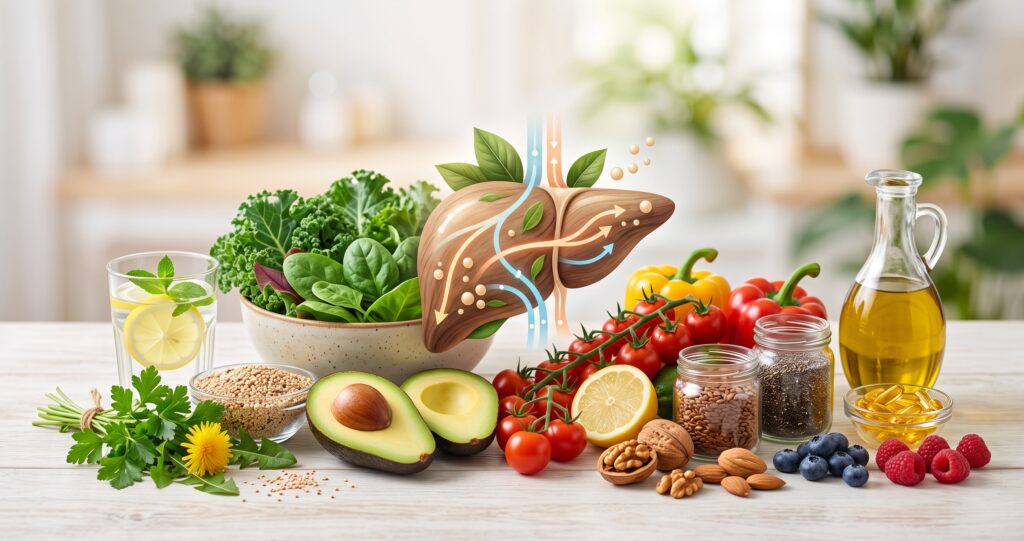
Disclosure: This site may contain affiliate links. This content is for informational purposes only and does not constitute medical advice.
KEY TAKEAWAYS
- The liver is the command center of fat metabolism — it decides whether fat is burned, stored, or shipped out.
- It runs fatty acid oxidation (burning fat for energy) and lipogenesis (making and storing fat).
- When the liver becomes fat-burdened, this balance tips toward storage, slowing fat-burning.
- Supporting liver function is therefore a legitimate lever for fat metabolism — alongside diet and weight loss.
Every diet plan focuses on what goes in your mouth. Almost none mention the organ that decides what happens to it. Your liver is the master switchboard of fat metabolism — and understanding its role explains more about stubborn fat than any calorie chart. Here’s what it actually does.
The Liver: Your Body’s Fat-Processing Hub
Think of the liver as central command for fat. Nearly every fatty acid you eat or release from storage passes through it, and the liver decides its fate.
According to research on hepatic metabolism, the liver handles a huge range of reactions to maintain lipid balance — including lipid synthesis (making fat), fatty acid oxidation (burning fat for energy), and the packaging and export of fats to the rest of the body.
In other words, the liver is constantly making three decisions with the fat that reaches it: burn it, store it, or ship it out. The balance of those decisions largely determines whether you’re burning fat or accumulating it.
The Two Opposing Processes
Fat metabolism in the liver comes down to a tug-of-war between two opposing pathways:
Fatty acid oxidation (β-oxidation) — this is fat burning. The liver breaks fatty acids down to produce energy. When this pathway dominates, you’re using fat as fuel.
Lipogenesis — this is fat making and storing. The liver synthesizes new fat, often from excess carbohydrates, and stores or exports it. When this dominates, you’re accumulating fat.
As research in Clinical Science explains, hepatic lipid metabolism is regulated by the balance between fatty acid uptake, synthesis (lipogenesis), and utilization by β-oxidation — and when that balance is altered, hepatic lipid accumulation begins. Your metabolic fate hinges on which side of this tug-of-war wins.
What Your Liver Actually Does for Metabolism (and Why It Slows After 40)
What Tips the Balance Toward Burning
Several factors push the liver toward the fat-burning side of the equation:
- A calorie deficit / fasting state — signals the liver to break down fat for energy
- Regular physical activity — increases demand for fat oxidation
- Lower refined-carb intake — reduces the raw material for lipogenesis
- Good insulin sensitivity — insulin signals fat storage, so better sensitivity favors burning
- Adequate protein — supports lean mass and metabolic demand
Notice the theme: the fundamentals of fat loss work largely by tipping the liver’s balance toward oxidation. That’s the mechanism underneath “diet and exercise.”
What Tips It Toward Storage
Conversely, several factors push the liver toward fat accumulation:
- Chronic caloric surplus — floods the liver with more fat than it can burn
- Excess refined sugar and alcohol — both drive lipogenesis directly
- Insulin resistance — keeps the storage signal switched on
- Fat already accumulated in the liver — impairs its fat-burning machinery, as research shows ineffective fat-sensing leads to reduced energy burning
That last point is the vicious cycle we’ve covered: once the liver becomes fat-burdened, its ability to burn fat declines, tipping the balance further toward storage. The switchboard gets stuck on “store.”
The Link Between Liver Health and Stubborn Belly Fat
Why This Makes the Liver a Legitimate Target
Here’s the practical upshot. Because the liver is where the burn-vs-store decision is made, supporting its function is a genuine lever for fat metabolism — not a fringe idea.
This is the real rationale behind liver-support approaches to weight: not “detox,” but improving the function of the organ that governs whether fat gets burned or stored. Gradual weight loss, a Mediterranean diet, less sugar and alcohol, and (for some) liver-supporting ingredients all work by helping the liver tip back toward oxidation.
It reframes the whole conversation: you’re not just cutting calories in the abstract — you’re influencing the switchboard that decides your fat’s fate.
Frequently Asked Questions
What role does the liver play in fat metabolism?
The liver is the central hub of fat metabolism — it decides whether fatty acids are burned for energy (fatty acid oxidation), stored, or shipped out (lipogenesis and export). The balance of these processes largely determines whether you burn or accumulate fat.
How does the liver burn fat?
Through fatty acid oxidation (β-oxidation), where it breaks fatty acids down to produce energy. When this pathway dominates over fat-making (lipogenesis), the body uses fat as fuel. A calorie deficit, activity, and good insulin sensitivity favor this burning side.
Why does a fatty liver burn less fat?
When fat accumulates in the liver, its fat-sensing and oxidation machinery becomes less efficient — research shows ineffective fat-sensing leads to reduced energy burning. This tips the balance toward storage, creating a cycle where a fat-burdened liver burns fat less well.
Can supporting my liver help me burn fat?
Supporting liver function is a legitimate lever, since the liver governs the burn-vs-store decision. This means gradual weight loss, a Mediterranean diet, less sugar and alcohol, and sometimes liver-supporting ingredients — working by helping the liver favor fat oxidation, alongside diet and exercise.
Conclusion
The liver is the unsung command center of fat metabolism — constantly deciding whether the fat reaching it gets burned, stored, or shipped out. That decision, governed by the tug-of-war between fatty acid oxidation and lipogenesis, largely determines whether you accumulate or lose fat. And when the liver becomes fat-burdened, the switchboard sticks on “store.”
This is exactly why supporting liver function is a legitimate target for fat metabolism — the fundamentals of fat loss largely work by tipping the liver toward burning. Understanding this reframes weight management around the organ that actually runs it.
Since a sluggish liver and slow metabolism often show up alongside fatigue, many people look for supplements that tackle both at once. Here’s what actually works — and what doesn’t.
References
- Frontiers / PMC — Hepatic lipid metabolism: synthesis, oxidation, and export. https://www.ncbi.nlm.nih.gov/pmc/articles/PMC11791920/
- Clinical Science (Portland Press) — Balance of lipogenesis and β-oxidation in the liver. https://portlandpress.com/clinsci/article/136/18/1347/231842/
- AJP-Gastrointestinal and Liver Physiology — Fat-sensing, oxidation, and hepatic steatosis. https://journals.physiology.org/doi/full/10.1152/ajpgi.00521.2005
About the author: Diana Woods researches and writes evidence-based content on weight management and metabolic health for WeightLossReviewPro. Her articles are grounded in current published research and cite primary medical sources. Diana is a content researcher and writer, not a medical professional — her work is informational and is not a substitute for advice from your own doctor.