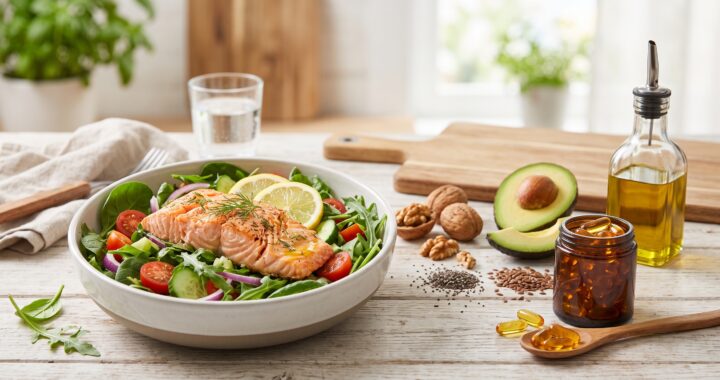
How to Combine Diet, Movement and Supplements the Right Way


Disclosure: This site may contain affiliate links. This content is for informational purposes only and does not constitute medical advice.
KEY TAKEAWAYS
- The order matters: diet and movement are the foundation; supplements are the final, optional layer.
- Supplements amplify a solid routine — they can’t compensate for a missing one.
- “Stacking” works when each element targets a different mechanism (e.g., diet for calories, strength for muscle, liver support for metabolism).
- The biggest mistake is inverting the pyramid — relying on supplements while neglecting the fundamentals.
Diet, movement, supplements — most people know they need all three, but few combine them in a way that actually works. Get the order and the balance right, and each element amplifies the others. Get it wrong, and you waste effort (and money) on a supplement propping up a shaky foundation. Here’s how to combine them the right way.
The Hierarchy That Actually Matters
Before any specific tactics, internalize the single most important principle: these three elements form a hierarchy, not an equal partnership.
Think of it as a pyramid:
- Base: Diet — the largest, most impactful layer; determines your calorie balance and nutrient intake
- Middle: Movement — builds and preserves muscle, improves insulin sensitivity, supports the burn
- Top: Supplements — the smallest layer; a modest optimization on top of a solid base
Every credible piece of research we’ve covered reinforces this order. Supplements showed their effects in people already managing diet and exercise. Get the hierarchy backwards — supplement-first, diet-last — and nothing works well. This is the mistake that wastes the most effort.
How Stress Hormones Shrink Your Daily Calorie Burn
Layer 1: Get the Diet Foundation Right
Everything starts here, because diet drives the calorie balance that determines fat loss:
- Prioritize protein — supports satiety and protects the muscle that maintains metabolic rate
- Emphasize fiber and whole foods — steadies blood sugar and supports gut and liver health
- Moderate refined sugar and alcohol — both drive liver fat and lipogenesis directly
- Aim for a moderate deficit — not the aggressive restriction that triggers metabolic adaptation
No amount of movement or supplementation compensates for a diet that isn’t working. This layer is non-negotiable.
Layer 2: Add Movement Strategically
Movement isn’t just about burning calories during exercise — its bigger value is what it does to your body composition and metabolism:
- Strength training — the priority after 40; builds and preserves the muscle that protects your metabolic rate and insulin sensitivity
- Cardio — supports fat loss and cardiovascular health (the largest analysis found it especially effective for fat loss)
- Daily activity (NEAT) — the non-exercise movement that can vary calorie burn by hundreds a day
- Consistency over intensity — sustainable movement beats punishing sessions you can’t maintain
Movement and diet together form the foundation that actually produces results. This is 90% of the picture.
Layer 3: Add Supplements as the Final Optimization
Only once the foundation is solid do supplements earn their place — as a modest optimization, not a replacement:
- Match the supplement to a real gap — e.g., correct an actual deficiency (iron, B12, vitamin D) rather than guessing
- Target a specific mechanism — e.g., liver support for fat metabolism, if that’s your bottleneck
- Set realistic expectations — supplements amplify a good routine modestly; they don’t rescue a poor one
- Give it time — ingredients like silymarin and berberine work over 8–24 weeks
This is where a liver-support formula like HepatoBurn fits — as the top-of-pyramid layer supporting the liver’s role in fat metabolism, after the diet and movement foundation is in place. Used that way, it can add something. Used to replace the foundation, it can’t.
–> See the latest HepatoBurn pricing and availability
The Synergy: Why Combining Beats Any Single Element
Here’s why combining them correctly is more than the sum of its parts: each targets a different mechanism.
Diet controls calorie balance. Strength training preserves the muscle and insulin sensitivity that diet alone doesn’t build. Liver-support ingredients target the organ that governs whether fat is burned or stored. Stress management and sleep protect the hormonal environment (cortisol, insulin) that all of it depends on.
When each element addresses a distinct mechanism, they stack rather than overlap. That’s real synergy — and it’s why the combination, in the right order, dramatically outperforms any single piece done in isolation.
The Role of the Liver in Fat Metabolism
The Biggest Mistake: Inverting the Pyramid
The single most common error is inverting the hierarchy: relying on a supplement while neglecting diet and movement. It’s the “magic pill” mindset, and it fails every time — because a supplement propping up a broken foundation has nothing to amplify.
If you take one thing from this: build the base first. A great supplement on a poor foundation disappoints; a modest supplement on a strong foundation contributes. The order isn’t a detail — it’s the whole game.
Frequently Asked Questions
What’s the right order for diet, movement, and supplements?
Diet is the foundation (calorie balance, nutrients), movement is the middle layer (muscle, insulin sensitivity), and supplements are the final, optional optimization on top. This hierarchy matters because supplements amplify a solid routine but can’t replace one — research shows they work in people already managing diet and exercise.
Can supplements make up for a poor diet?
No. This is the most common and costly mistake. Supplements are a modest optimization layer — they amplify a good foundation but have nothing to work with if diet and movement are neglected. A great supplement on a poor foundation disappoints.
How do I combine everything for the best results?
Build the diet foundation (protein, fiber, moderate deficit), add strategic movement (especially strength training after 40), then layer supplements that target a specific gap or mechanism. Each addresses a different mechanism, so combined correctly they stack for real synergy.
Where do liver-support supplements fit in?
At the top of the pyramid — as an optimization supporting the liver’s role in fat metabolism, after the diet and movement foundation is in place. Ingredients like silymarin and berberine work over 8–24 weeks and amplify a solid routine, not replace it.
Conclusion
Combining diet, movement, and supplements the right way comes down to respecting the hierarchy: diet is the foundation, movement is the essential middle layer, and supplements are the final, modest optimization on top. Each targets a different mechanism — calorie balance, muscle and insulin sensitivity, and (for liver-support ingredients) the organ that governs fat metabolism — so combined in the right order, they stack into real synergy.
The fatal mistake is inverting the pyramid: leaning on a supplement while neglecting the fundamentals. Build the base first, add movement, then let a well-chosen supplement amplify a routine that’s already working. That order isn’t a detail — it’s the difference between results and wasted effort.
Speaking of well-chosen supplements, the “liver support” category is full of products making very different promises. Here’s an honest comparison of genuine liver support versus “detox” marketing.
References
- Frontiers in Endocrinology — Combined training and body composition in women. https://www.ncbi.nlm.nih.gov/pmc/articles/PMC10306117/
- PLOS One — Berberine and liver fat: effects with lifestyle. https://journals.plos.org/plosone/article?id=10.1371/journal.pone.0134172
- Remedy’s Nutrition / 2024 systematic review — Silymarin’s 8–24 week timeline. https://remedysnutrition.com/blogs/letter-vitamins/milk-thistle-for-fatty-liver-and-nafld-evidence
About the author: Diana Woods researches and writes evidence-based content on weight management and metabolic health for WeightLossReviewPro. Her articles are grounded in current published research and cite primary medical sources. Diana is a content researcher and writer, not a medical professional — her work is informational and is not a substitute for advice from your own doctor.