Green Tea Extract vs Bitter Orange: Which Burns More Fat?

Disclosure: This site may contain affiliate links. This content is for informational purposes only and does not constitute medical advice.
Two ingredients dominate the “natural fat burner” conversation. Only one of them has meta-analyses showing actual kilograms lost. Here’s the research most product pages won’t walk you through.
Green Tea Extract: The Evidence Behind the Hype
Green tea’s fat-burning reputation centers on EGCG, its primary active catechin. The mechanism is well-understood: EGCG inhibits an enzyme called COMT that normally breaks down norepinephrine. Slow that breakdown, and norepinephrine keeps signaling fat cells to release stored fat for longer.
That’s the theory. Here’s the actual data.
A meta-analysis by Hursel and colleagues in the International Journal of Obesity found green tea catechins combined with caffeine produced significantly greater weight loss and better weight maintenance than caffeine alone.
But — and this matters — not every study agrees.
The Green Tea Research Nobody Puts on the Label
Some controlled trials found no significant difference in resting energy expenditure between green tea extract and placebo, particularly among people who already had moderate-to-high habitual caffeine intake. In one trial, overweight women consuming roughly 1,125 mg of catechins daily during dietary restriction showed no significant difference in fasting energy expenditure versus placebo — and researchers flagged that participants were already habitual caffeine consumers, which may have blunted the effect entirely.
A review of green tea extract and fat oxidation published in Nutrients describes findings across 8-to-12-week studies as openly equivocal — not settled.
Translation: if you already drink a lot of coffee, green tea extract’s added benefit may be smaller than the marketing suggests.
Bitter Orange: Older Claims, Newer Doubts
Bitter orange (Citrus aurantium) works through a completely different compound — p-synephrine — and its research story runs almost the opposite direction.
The widely-cited Stohs review in the International Journal of Medical Sciences, covering roughly 20 human clinical trials, found p-synephrine — alone or in combination — was associated with increased resting metabolic rate and modest weight loss over six to twelve weeks, without significant adverse effects on heart rate or blood pressure.
That’s the version most bitter-orange product pages tell you. Here’s what they leave out.
The Meta-Analysis That Complicates the Story
A more recent systematic review and meta-analysis reached a markedly more skeptical conclusion: based on the clinical studies analyzed, synephrine tends to raise blood pressure and heart rate, and there is no clear evidence it facilitates weight loss.
And in a study specifically conducted in women — not men, not mixed groups — researchers found that a 3 mg/kg dose of p-synephrine did not modify energy expenditure or fat oxidation during submaximal aerobic exercise in healthy active women.
That last one deserves weight. Most of the positive bitter orange research ran on mixed or male samples. When someone tested it specifically on women, the effect didn’t show up.
Head-to-Head: Where the Evidence Actually Lands
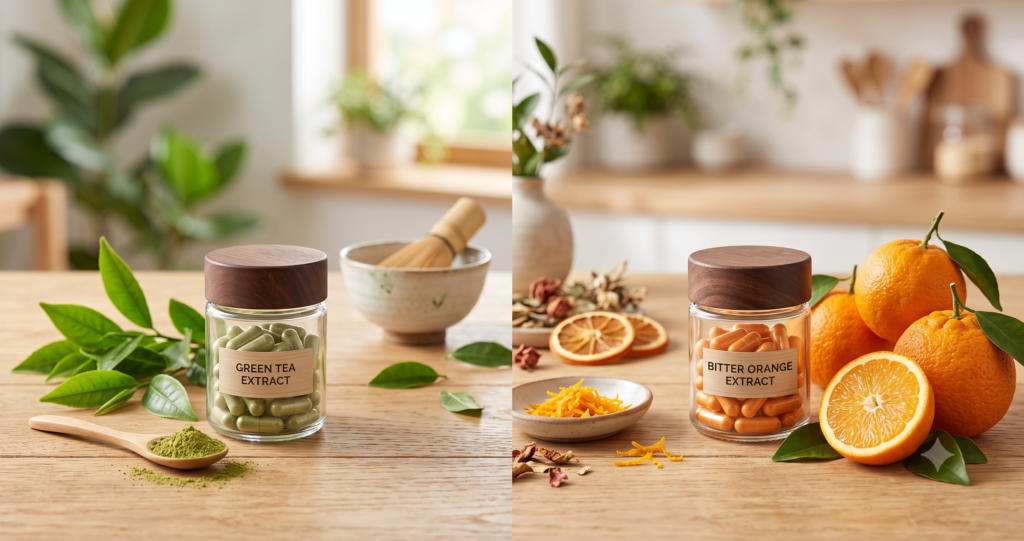
- Green Tea Extract (EGCG) — Mechanism: COMT inhibition extends norepinephrine’s fat-releasing signal. Evidence: positive meta-analyses, but effects shrink or vanish in habitual caffeine users. Side effects: generally mild.
- Bitter Orange (p-synephrine) — Mechanism: adrenergic stimulation of fat cell activity. Evidence: older reviews positive; a newer meta-analysis found no clear weight-loss evidence and flagged blood pressure effects; a women-specific study found no metabolic effect. Side effects: mild heart rate and blood pressure increases in some studies.
The honest scoreboard: green tea has the more consistent record. Bitter orange has an older positive signal that newer, more rigorous analysis has started to challenge.
Why Formulas Increasingly Combine Both
Given that neither ingredient alone has bulletproof evidence, it’s not surprising that modern metabolism formulas — Citrus Burn included — pair bitter orange with green tea rather than betting everything on one compound.
It’s a reasonable hedge. If one ingredient’s effect turns out modest for your body, you’re not relying on it exclusively.
→ See the full Citrus Burn ingredient list and current pricing
Frequently Asked Questions
Which ingredient has stronger scientific backing?
Based on available meta-analyses, green tea extract currently has more consistent supporting evidence — though results still vary by individual and by how much caffeine you already consume.
Is it safe to take green tea extract and bitter orange together?
Both contain stimulant-adjacent compounds, so combining them can increase the likelihood of jitteriness or elevated heart rate. Anyone with cardiovascular concerns should check with a doctor first.
Why do studies on these ingredients contradict each other?
Differences in dose, participant caffeine habituation, study duration, sex of participants, and whether the ingredient was tested alone or combined all affect outcomes — which is why single studies shouldn’t be treated as the final word.
Does either ingredient work without diet and exercise changes?
No. In the studies showing positive effects, participants were generally also managing diet and often exercise. Neither is documented to produce meaningful fat loss on its own.
Conclusion
Green tea extract holds the stronger, more consistent research record of the two — but “stronger” doesn’t mean “guaranteed,” and bitter orange’s contested evidence isn’t disqualified either. The most defensible approach based on current research is a formula leaning on both rather than staking everything on one contested effect.
If you’re weighing whether a combined formula is worth trying, it’s worth knowing exactly what protection you have if it doesn’t work for you.
Citrus Burn Refund Policy: How It Really Works