How Much Water Should You Really Drink to Lose Weight?

The advice to drink more water for weight loss is everywhere — and like most ubiquitous health advice, it contains genuine truth wrapped in oversimplification. Water does support weight loss, but not in the dramatic way often implied. And the “eight glasses a day” guideline, while reasonable as a baseline, does not account for the individual variation that makes hydration needs meaningfully different from person to person.
This article gives you the honest, research-based picture of how hydration supports weight management — what the evidence actually shows, how much you personally need, and the practical habits that make adequate hydration a genuine weight management tool rather than just a checkbox.
Foods That Naturally Speed Up Your Metabolism
Disclosure: This content is for informational purposes only and does not constitute medical advice.
What the Research Actually Shows About Water and Weight Loss
The evidence for water supporting weight loss is real — but more modest and more nuanced than popular accounts suggest. Understanding what the research does and does not show sets the right framework for using hydration effectively.
Water before meals reduces caloric intake. Multiple controlled studies show that drinking approximately 500 milliliters — two cups — of water before meals produces meaningful reductions in caloric intake during the meal. A well-designed study in adults over 40 showed that participants who drank 500 milliliters before each meal lost approximately 44 percent more weight over twelve weeks than the control group following the same diet without pre-meal water. The mechanism is straightforward — water occupies stomach volume, activating stretch receptors that signal early satiety.
Water temporarily increases metabolic rate. Research shows that drinking 500 milliliters of water produces a temporary increase in metabolic rate of approximately 24 to 30 percent — lasting 30 to 40 minutes — attributed to the thermogenic effect of warming the water to body temperature and the sympathetic nervous system response to increased gastric volume. While this effect is modest and temporary, consistent daily hydration maintains this metabolic activation across the day in ways that contribute meaningfully over weeks and months.
Hydration supports fat metabolism. The process of lipolysis — the breakdown of stored fat into free fatty acids — requires water as a reactant. The chemical reaction of fat hydrolysis literally uses water molecules. Dehydration therefore directly impairs the body’s capacity to break down stored fat — making adequate hydration a prerequisite for effective fat burning rather than simply a general health practice.
Replacing high-calorie beverages with water reduces caloric intake. Studies examining beverage substitution consistently show that replacing sugar-sweetened drinks, juice, or alcohol with water produces meaningful caloric reductions that directly support weight loss — with some studies showing this single substitution producing more weight loss than equivalent dietary changes.
The Eight Glasses Myth — and What You Actually Need
The “eight glasses of eight ounces” — or approximately two liters — daily recommendation is a reasonable population-level guideline but a poor individual prescription. Actual hydration needs vary significantly based on body size, activity level, climate, diet, and health status.
A more personalized approach to hydration needs considers:
Body weight. A larger body requires more water for all physiological processes — including metabolism, circulation, and temperature regulation. A useful general guideline is approximately 30 to 35 milliliters of water per kilogram of body weight per day — meaning a 70-kilogram woman needs approximately 2.1 to 2.45 liters of total fluid daily.
Activity level. Exercise increases water loss through sweat — a meaningful amount that varies with exercise intensity, duration, and environmental temperature. Adding approximately 400 to 600 milliliters of water for each hour of moderate exercise is a reasonable compensation guideline.
Climate and environment. Hot or humid environments increase sweat rate and fluid loss independent of exercise. Air conditioning and heating both reduce air humidity — increasing insensible water loss through respiration and skin evaporation.
Diet composition. Foods vary significantly in water content — fruits and vegetables typically contain 80 to 95 percent water, contributing meaningfully to total fluid intake. A diet high in fresh produce requires less supplemental beverage intake than one composed primarily of processed, dry foods.
Caffeine and alcohol. Both caffeine and alcohol have diuretic properties — increasing urine output and net fluid loss. Women who consume significant caffeine or alcohol need to account for this in their overall fluid balance.
Urine Color: The Practical Hydration Gauge
Rather than tracking fluid intake mathematically — which most people find impractical to maintain — urine color provides a reliable real-time indicator of hydration status.
Pale yellow — well hydrated. The target for most people most of the time.
Clear — possibly overhydrated. While not dangerous for most healthy adults in the short term, consistently clear urine may indicate excessive fluid intake beyond what the kidneys are filtering comfortably. It can also dilute electrolytes — particularly sodium — in ways that impair cellular function.
Medium to dark yellow — mild dehydration. A signal to drink more before the next meal or during the next activity.
Amber or brown — significant dehydration. Requires prompt fluid intake and, if persistent, medical attention.
First morning urine is typically darker than later in the day — reflecting overnight fluid restriction — and is not necessarily a sign of chronic dehydration. The target is pale yellow through most of the day rather than specifically first thing in the morning.
Timing Matters: When to Drink for Maximum Weight Management Benefit
The research suggests that hydration timing — not just total intake — influences how meaningfully water supports weight management.
Before meals — the most evidence-based timing. Drinking 500 milliliters — approximately two cups — of water fifteen to twenty minutes before each meal consistently shows the most meaningful effect on caloric intake reduction in research. This pre-meal timing allows the gastric volume and stretch receptor activation to be established before eating begins — producing more effective appetite moderation than drinking during the meal.
Morning — metabolic activation. Starting the day with one to two cups of water before coffee or tea provides hydration after overnight fasting, supports the thermogenic response described above, and provides a foundation for the day’s fluid intake before caffeine’s mild diuretic effect begins.
Around exercise — performance and recovery. Adequate hydration before, during, and after exercise supports both performance — even mild dehydration measurably reduces exercise capacity — and the fat metabolism that exercise promotes. Drinking before exercise and replacing fluids lost through sweat afterward maintains the metabolic efficiency of fat oxidation during activity.
Not large volumes immediately before bed. While staying hydrated through the evening is appropriate, drinking large volumes in the hour before bed — particularly for women with nocturia — can disrupt sleep through nighttime bathroom trips. For women whose sleep quality is already compromised by perimenopausal symptoms, avoiding large fluid volumes in the hour before bed preserves sleep continuity.
What Counts Toward Your Fluid Intake
Total fluid intake — not just plain water — contributes to daily hydration needs. Understanding what counts and what counts less helps practical planning.
Counts fully: Plain water — still or sparkling. Herbal teas — caffeine-free and without added sugar. Broth-based soups. Milk — providing fluid alongside protein and calcium. Coconut water — providing fluid alongside electrolytes.
Counts partially — mild diuretic effect reduces net contribution: Coffee and caffeinated tea. Energy drinks with caffeine. Caffeinated sodas — though these are not recommended for other reasons.
Counts negatively — net fluid loss exceeds intake: Alcohol — the net diuretic effect of alcohol exceeds its fluid contribution, meaning alcoholic beverages contribute to dehydration rather than hydration.
Food sources of water: Fresh fruits and vegetables contribute meaningfully to total fluid intake — cucumber, lettuce, celery, and watermelon are over 90 percent water. A diet rich in fresh produce contributes 20 to 30 percent of total daily fluid needs from food sources alone.
Hydration and Metabolism in Women Over 40
For women over 40, the relationship between hydration and weight management has several specific dimensions worth highlighting.
Dehydration mimics hunger. The same hypothalamic region that registers thirst also processes hunger signals — and mild dehydration is frequently misinterpreted as hunger rather than thirst. For women navigating the hunger hormone disruption of perimenopause — where ghrelin and leptin are already dysregulated — this confusion is more consequential. Drinking a glass of water before responding to an ambiguous hunger signal reduces unnecessary caloric intake for many women in this demographic.
Dehydration elevates cortisol. Physiological dehydration activates the stress response — elevating cortisol in ways that compound the already elevated cortisol burden of perimenopause. For women whose primary weight challenge involves cortisol-driven visceral fat accumulation, maintaining adequate hydration removes one source of unnecessary cortisol stimulation.
Hot flashes increase fluid loss. The episodic sweating of hot flashes increases fluid loss beyond baseline — particularly at night, when women experiencing night sweats may lose meaningful fluid without the opportunity to immediately replace it. Compensating with additional water intake during and after hot flash episodes supports hydration status for this specific population.
Thermogenic supplements increase fluid needs. Women using thermogenic supplements — including those containing citrus aurantium or green tea extract — have modestly increased fluid needs from the mild thermogenic heat production and the diuretic properties of green tea. Eight to ten glasses per day is the appropriate minimum alongside thermogenic supplement use.
Practical Hydration Habits That Work
The gap between knowing how much water to drink and actually drinking it is where most hydration intentions fail. These evidence-supported habits close that gap effectively:
Carry a measured water bottle. A 750-milliliter or one-liter bottle that you refill twice daily removes the need for ongoing tracking while ensuring adequate intake.
Drink one glass before each meal. This habit simultaneously addresses pre-meal hydration and the appetite-moderating benefit of pre-meal water consumption — delivering weight management benefit while establishing a reliable daily intake rhythm.
Start every morning with water before coffee. Overnight fasting produces mild dehydration — beginning the day with water before the diuretic effect of coffee begins restores baseline hydration and supports the morning metabolic activation described above.
Set visible reminders. A water bottle on your desk, reminders on your phone at set intervals, or attaching hydration to specific daily activities — arriving at work, taking a supplement, finishing a meeting — translates intention into consistent behavior.
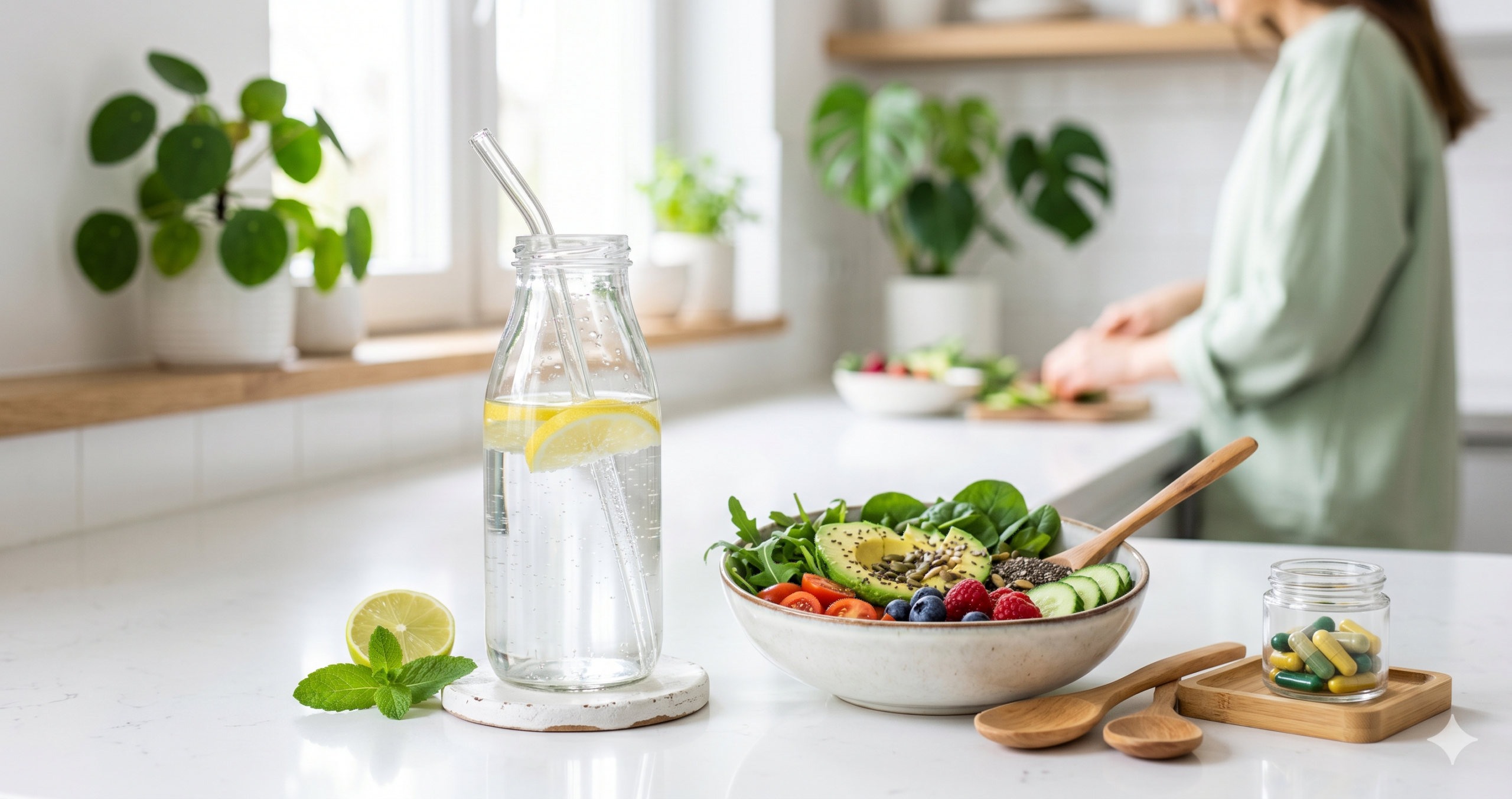
Flavor water if plain water is unappealing. Lemon, cucumber, mint, or ginger in water provides flavor that makes adequate intake more achievable for users who find plain water unappealing — without adding meaningful calories.
The Connection Between Sleep and Weight Gain
Frequently Asked Questions
Can drinking more water cause weight loss without dietary changes? Research suggests water drinking supports weight loss primarily through pre-meal appetite reduction and replacement of high-calorie beverages — both of which require some behavioral change alongside the water consumption. Pure hydration without any other change produces modest weight loss effects — primarily from reduced accidental overeating from thirst-hunger confusion and mild metabolic rate support. Meaningful weight loss from hydration alone is unlikely without accompanying dietary changes.
Does cold water burn more calories than room temperature water? Research shows a slightly greater thermogenic response to cold water than room temperature water — attributed to the energy required to warm cold water to body temperature. The effect is real but very small — approximately eight additional calories per 500-milliliter glass of cold water versus room temperature water. This is not a meaningful weight loss strategy on its own, but if you prefer cold water and are drinking adequate amounts, this minor additional benefit is an added bonus.
Is sparkling water as hydrating as still water? Research consistently shows that sparkling water hydrates as effectively as still water — the carbonation does not meaningfully impair absorption or increase fluid loss. For users who find sparkling water more enjoyable and therefore drink more of it, it is a perfectly valid hydration choice. Plain sparkling water without added sodium or sugar is the healthiest option.
How do I know if I am drinking too much water? Overhydration — hyponatremia — involves sodium dilution from excessive fluid intake and is most relevant to endurance athletes consuming very large volumes during prolonged exercise. For most adults following general health guidelines, overhydration is uncommon. Consistently clear urine and frequent urination that disrupts daily function are practical indicators of potentially excessive intake. Most adults are more likely to be mildly underhydrated than overhydrated.