Milk Thistle and Silymarin: Do They Actually Support Fat Loss?

Disclosure: This site may contain affiliate links. This content is for informational purposes only and does not constitute medical advice.
KEY TAKEAWAYS
- Silymarin (milk thistle’s active complex) has solid evidence for improving liver enzymes and liver fat in NAFLD.
- But it’s not a direct “fat-loss” agent — its weight benefit is indirect, through better liver function.
- Best results consistently come paired with 7–10% weight loss and a Mediterranean diet.
- Honest verdict: a legitimate liver-support ingredient, not a standalone weight-loss pill.
Milk thistle shows up in nearly every “liver detox” and fat-loss formula on the shelf. So here’s the honest question worth answering before you spend: does it actually help you lose fat, or does it just help your liver — and are those the same thing?
The answer is more nuanced than either the hype or the skeptics admit.
What Silymarin Actually Is
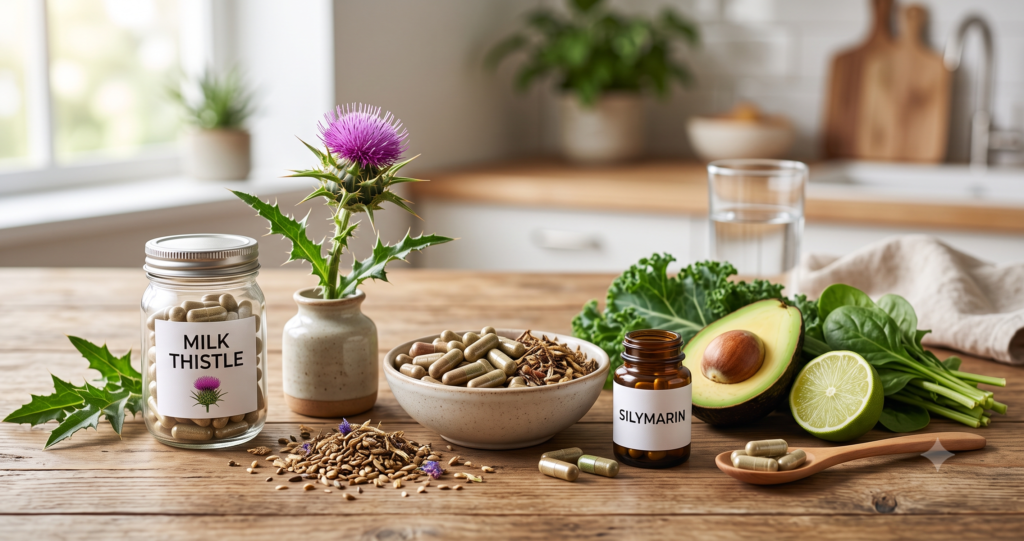
Milk thistle’s active ingredient isn’t one compound — it’s a group of flavonolignans collectively called silymarin, with silibinin as the most active component.
It’s been used for liver complaints for centuries, but unlike most folk remedies, it has accumulated real modern research. The key question is what that research actually measures — because “supports the liver” and “burns fat” are not the same claim.
The Strong Evidence: Liver Function
Where silymarin genuinely delivers is liver function, and the evidence here is legitimate.
A 2024 systematic review found silymarin at 140–420 mg daily reduces the liver enzymes ALT and AST — markers of liver stress — in non-alcoholic fatty liver disease (NAFLD) trials over 8–24 weeks. A landmark 48-week trial even showed improvement in liver fibrosis on biopsy at 700 mg daily.
It works through documented mechanisms: antioxidant activity, stabilizing liver cell membranes, and reducing inflammation. This isn’t folklore — it’s a real, measurable effect on the organ.
What Your Liver Actually Does for Metabolism (and Why It Slows After 40)
The Honest Answer on Fat Loss Specifically
Now the question you actually came for. Does that liver benefit translate to fat loss?
Here’s the honest framing: silymarin’s fat benefit is indirect. Since the liver is the hub of fat metabolism, improving a fatty, stressed liver can support better fat processing. But silymarin is not a thermogenic or appetite suppressant — it doesn’t burn calories or curb hunger the way stimulant fat burners claim to.
And critically, the research is consistent that its best results come paired with 7–10% weight loss and a Mediterranean diet. Reviewers describe milk thistle as supportive, not curative.
So the honest answer: silymarin supports the organ that governs fat metabolism, which can help — but it’s not a fat-loss pill you take instead of doing the work. Anyone selling it that way is overstating the evidence.
Why This Matters More After 40
For women navigating the menopause transition, this indirect liver benefit is actually well-targeted. As we’ve covered, falling estrogen releases the brake on liver fat production, and visceral fat feeds inflammatory signals straight into the liver.
An ingredient that supports liver function is aimed squarely at that mechanism — which is why liver-support ingredients like silymarin fit the 40+ picture better than a random stimulant. It’s targeting the right organ for the right reason.
How to Use It Realistically
- Set the right expectation — it supports liver health, which indirectly aids fat metabolism; it won’t melt fat alone
- Pair it with the fundamentals — the research is unanimous that weight loss and a Mediterranean diet are where the real results come from
- Look for meaningful doses — the studied range is roughly 140–420 mg silymarin daily
- Be patient — liver-enzyme improvements build over 8–24 weeks, not days
- Check with a doctor — especially if you have a liver condition or take medication
One formula built around this liver-support logic is HepatoBurn, which pairs silymarin with berberine and other liver-supporting ingredients rather than relying on stimulants.
–> the latest HepatoBurn pricing and availability
Frequently Asked Questions
Does milk thistle help you lose weight?
Not directly. Silymarin (milk thistle’s active complex) supports liver function and can reduce liver fat, which indirectly aids fat metabolism since the liver runs it. But it’s not a thermogenic or appetite suppressant, and its best results come paired with weight loss and diet.
What does silymarin actually do?
It reduces liver enzymes (ALT, AST) and liver fat in NAFLD trials, working through antioxidant, membrane-stabilizing, and anti-inflammatory pathways. It’s one of the best-evidenced liver-support ingredients available.
How much milk thistle should I take?
Studies showing liver benefits typically used 140–420 mg of silymarin daily over 8–24 weeks. As with any supplement, anyone with a liver condition or on medication should consult a doctor first.
Is milk thistle worth taking for menopause belly fat?
It may be a reasonable support, since it targets the liver — an organ directly affected by falling estrogen and visceral fat after menopause. But it works best alongside strength training, protein, sleep, and diet, not as a standalone solution.
Conclusion
Do milk thistle and silymarin support fat loss? Honestly: they support the liver, and that helps fat metabolism indirectly — but they’re not a direct fat-loss agent. The evidence for improving liver enzymes and liver fat is genuinely solid; the evidence for melting fat on its own doesn’t exist.
Used the right way — meaningful dose, realistic expectations, paired with weight loss and a Mediterranean diet — silymarin is a legitimate liver-support ingredient that’s well-targeted for the 40+ menopause picture. Used as a magic pill, it disappoints. The honest framing is the useful one.
Silymarin is just one ingredient, though. If you’re looking at a full liver-support formula, it’s worth breaking down every ingredient inside it against the evidence.
References
- Remedy’s Nutrition / 2024 systematic review — Milk thistle for fatty liver and NAFLD: evidence. https://remedysnutrition.com/blogs/letter-vitamins/milk-thistle-for-fatty-liver-and-nafld-evidence
- Clinical Gastroenterology and Hepatology — Randomized silymarin trial for NASH (700 mg, 48 weeks). https://www.cghjournal.org/article/S1542-3565(17)30459-7/fulltext
- PMC — Silymarin as antioxidant therapy in chronic liver diseases: comprehensive review. https://www.ncbi.nlm.nih.gov/pmc/articles/PMC11404857/
About the author: Diana Woods researches and writes evidence-based content on weight management and metabolic health for WeightLossReviewPro. Her articles are grounded in current published research and cite primary medical sources. Diana is a content researcher and writer, not a medical professional — her work is informational and is not a substitute for advice from your own doctor.
