Do “Orange Peel Hack” Products Actually Deliver?

Disclosure: This site may contain affiliate links. This content is for informational purposes only and does not constitute medical advice.
You’ve seen the ads. A “weird orange peel trick” that supposedly melts fat after 40. Dozens of near-identical sites, same breathless narrative, same promise.
Let’s do something those pages never do: separate the ingredient’s actual evidence from the marketing wrapped around it.
What the “Orange Peel Hack” Actually Refers To
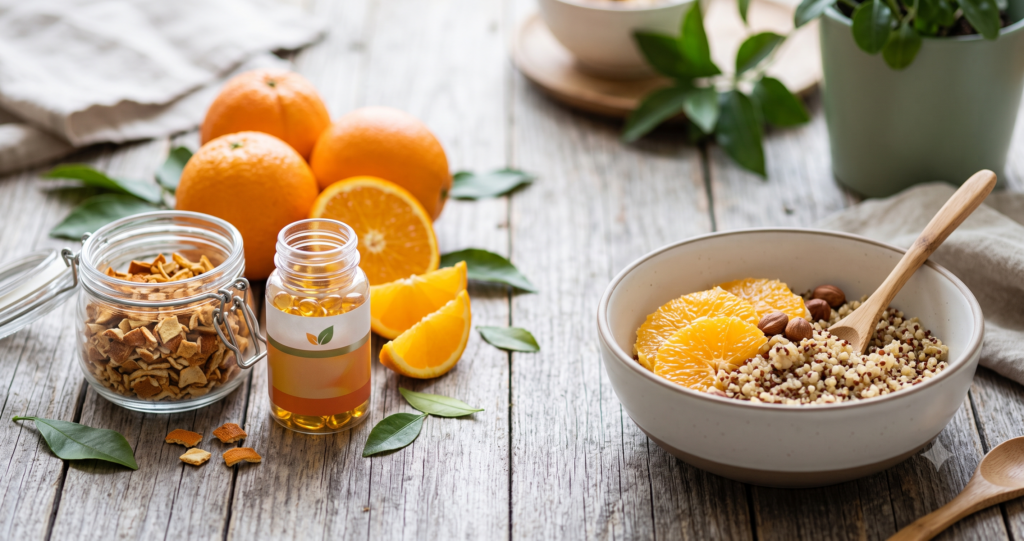
Strip away the viral packaging and the “orange peel hack” points to one real ingredient: bitter orange (Citrus aurantium) extract, standardized for its active compound p-synephrine. It’s a genuine thermogenic ingredient with a real research history — not an invention of the ad copy.
That’s the important distinction. The ingredient is real. The question is whether the products built around it deliver what their marketing implies.
The Evidence That Supports It
There’s a legitimate case, and it’s worth stating fairly. The widely-cited Stohs review in the International Journal of Medical Sciences, covering roughly 20 human clinical trials, found p-synephrine — alone or combined with other ingredients — was associated with increased resting metabolic rate and modest weight loss over six to twelve weeks, without significant adverse effects on heart rate or blood pressure.
That’s a real body of evidence. It’s the half of the story the orange-peel ads lean on — and they’re not wrong that it exists.
The Evidence That Complicates It
Here’s the half they skip.
A more recent systematic review and meta-analysis reached a markedly more skeptical conclusion: based on the clinical studies analyzed, synephrine tends to raise blood pressure and heart rate, and there is no clear evidence it actually facilitates weight loss.
And most pointedly for this audience: a study specifically in women found that a p-synephrine dose did not modify energy expenditure or fat oxidation during exercise in healthy active women. Much of the positive research ran on mixed or male samples — when tested specifically on women, the effect didn’t appear.
So the honest verdict on the ingredient: real, but contested. Newer, more rigorous analysis has challenged the older positive findings.
The Real Problem Isn’t the Ingredient — It’s the Clones
Here’s what actually separates a legitimate orange-peel product from a scam, and it has nothing to do with the ingredient.
The “orange peel hack” narrative has been copied across dozens of near-identical clone sites — many of them typosquats and lookalikes, quoting inconsistent claims, guarantee windows, and prices. As we covered in our piece on fake sellers, this is exactly where buyers get burned: not by the ingredient, but by unauthorized sites selling untested or counterfeit versions of it.
So the ingredient’s contested efficacy is only half the risk. The other half is buying a knockoff of it.
Citrus Burn Official Website Warning: Avoid Fake Sellers
How to Tell a Legitimate Product From the Hype
- Disclosed dosing — does it tell you how much p-synephrine you’re getting, or hide it in a proprietary blend?
- Combined formula — does it pair bitter orange with better-evidenced ingredients (like green tea), or bet everything on the contested one?
- Honest timeline — legitimate products point to 6–12 weeks; clone-site copy screams “results in days”
- Real guarantee — a long, verifiable refund window versus a vague or missing one
- Official channel only — the single biggest protection against the clone-site problem
CitrusBurn, for what it’s worth, sits on the more defensible side of most of these lines — it discloses its formula, combines bitter orange with green tea and other ingredients, and points to a 6–12 week timeline rather than an overnight miracle.
→ See the full CitrusBurn ingredient list and current pricing
Frequently Asked Questions
Is the “orange peel hack” a scam?
The underlying ingredient — bitter orange / p-synephrine — is real, with genuine (if contested) research. The “scam” risk comes more from clone sites selling counterfeit or untested versions, and from marketing that promises far more than the evidence supports.
Does bitter orange actually boost metabolism?
Older reviews found associations with increased resting metabolic rate; a more recent meta-analysis found no clear weight-loss evidence and flagged blood pressure effects. A women-specific study found no metabolic effect. The honest answer: contested.
Why are there so many similar “orange peel” websites?
The narrative has been widely copied across clone and lookalike sites. This is a known pattern — verify you’re on an official, authentic product site before buying anything.
What should I look for in a legitimate orange-peel product?
Disclosed dosing, a combined formula rather than a single contested ingredient, an honest 6–12 week timeline, a real refund guarantee, and purchase through an official channel only.
Conclusion
Do “orange peel hack” products deliver? The ingredient behind them is real but its weight-loss evidence is genuinely contested — stronger in older reviews, weaker in newer analysis, and notably absent in the one study run specifically on women. The bigger risk, though, is the swarm of clone sites selling untested knockoffs of it.
The ingredient isn’t a miracle, and it isn’t a scam. It’s a modestly-evidenced thermogenic wrapped in wildly overstated marketing. Judge the product, not the trend — and buy only from a verifiable source.
Which raises the question every honest buyer eventually asks: if the ingredient’s effect is modest, does a product like this do anything at all if you don’t change your diet?
Does Citrus Burn Work Without Diet Changes?